
The Regional Food Bank has launched an ambitious Agricultural Hub initiative that will expand the amount of fresh, locally grown food reaching our neighbors in need while strengthening partnerships with New York farmers.
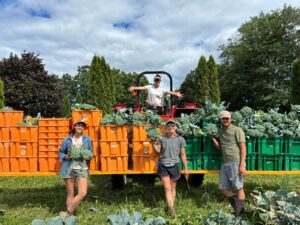
Photo: A harvest of broccoli and zucchini from North Point Community Farm in Essex County before delivery to the Regional Food Bank and our partners
“The goal is to connect more New York farms to our New York neighbors in need,” said Regional Food Bank CEO, Tom Nardacci. “The Regional Food Bank’s service area includes nearly two million acres of farmland from the lower Hudson Valley to the Canadian border. We have made great strides in connecting farmers and growers to those in need, but we know there are more opportunities to support our neighbors while also engaging with more of our local farmers and growers.”
Home to more than 10,000 active farms and nearly 2 million acres of farmland, the Food Bank’s 23-county service area is one of New York’s richest agricultural regions. The Agricultural Hub will help ensure more of that locally grown food stays in local communities by expanding the Food Bank’s capacity to grow, source, and distribute fresh products. The initiative includes enhancements at Patroon Land Farm like new greenhouse and high tunnel infrastructure, expanded partnerships with local farms, and innovative programs such as local farm micro-purchasing, customized pick-and-pack distribution, and pantry-based and mobile farm stands. Together, these efforts will increase the Food Bank’s agricultural distribution to 30 million pounds annually.
The Agricultural Hub builds on the success of Nourish New York, the state program that helps food banks purchase food directly from New York farmers and producers for distribution to families facing food insecurity. Through this partnership, the Regional Food Bank has purchased and distributed millions of pounds of locally grown food while supporting farms across our region.
In 2025, the Regional Food Bank distributed more than 53 million pounds of food, including 19.2 million pounds of fresh agricultural products such as produce, dairy, and protein. As the Agricultural Hub grows, it will create even more opportunities to connect farms of all sizes with the charitable food network, delivering fresh, nutritious food to underresourced communities while strengthening local agriculture.
We’ll continue to share updates as this initiative grows and let you know how you can help make its impact even greater.